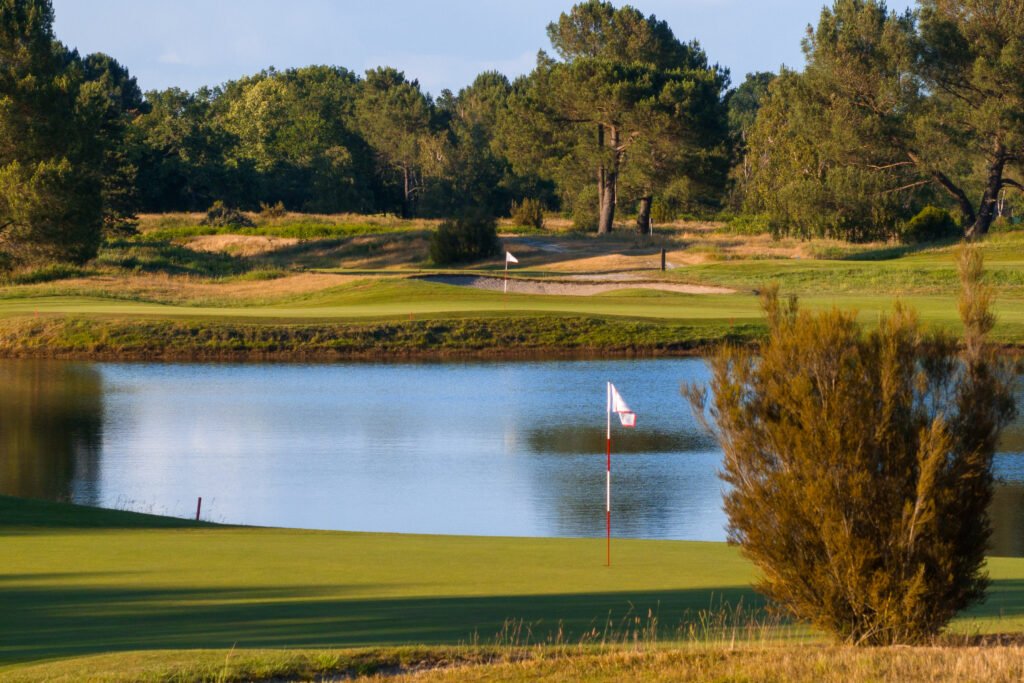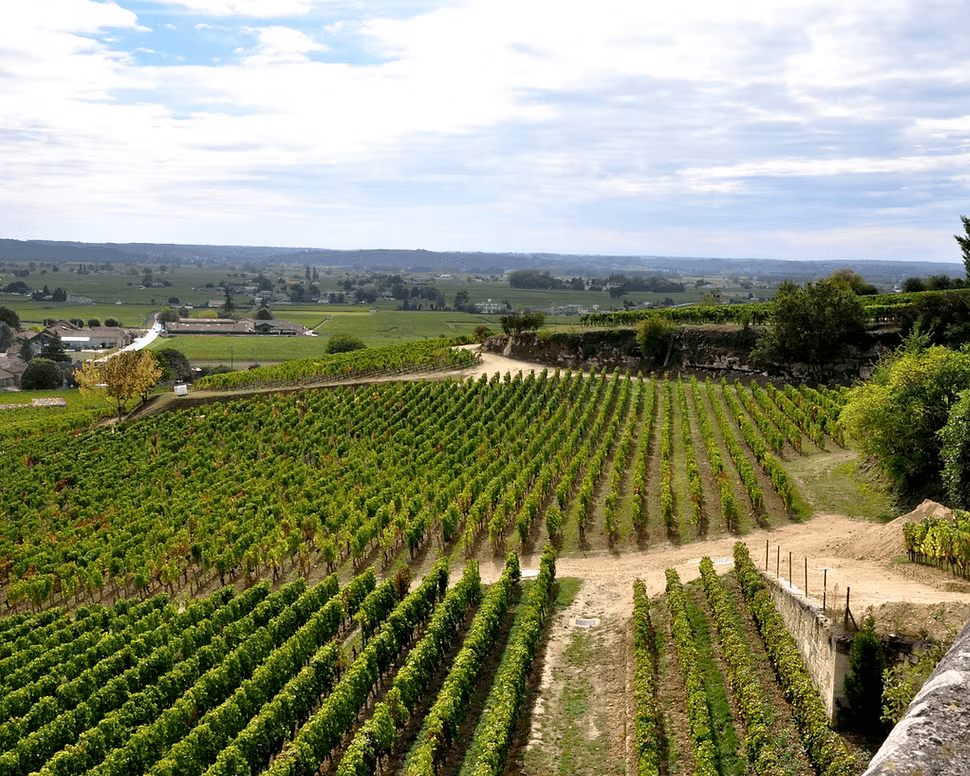

There is a particular pleasure in being shown somewhere you would never have found yourself.
Not because it is secret.
Not because nobody else knows about it.
But because you would probably have walked straight past.
A restaurant down a Bordeaux side street that has been serving the same neighbourhood for years. An oyster shack on the Bassin d’Arcachon where the view matters more than the tablecloth. A vineyard whose name does not appear on every visitor’s itinerary, but whose owner is prepared to sit down over lunch and talk about the land, the vintage and the decisions that shaped the wine in your glass.
These are often the places that stay with you.
And increasingly, they are the places we are looking for at Finest & Fairways.
Hidden in plain sight
Travel has never offered more choice.
A few minutes online can produce hundreds of hotels, restaurants, golf courses, vineyards and suggested itineraries.
But more choice does not necessarily create a better journey.
Quite often, it creates the opposite.
The places we find most interesting tend to reveal themselves through people.
A recommendation from a restaurateur.
A château suggested by somebody who actually drinks the wine.
A golf club that may not feature on every international golfer’s list but is deeply respected locally.
A hotel chosen because of the people running it rather than the number of stars beside its name.
That distinction matters.
We are not trying to compile a directory of everything worth seeing in Bordeaux, Saint-Émilion, Cognac – or anywhere else we go.
We are trying to understand what deserves a place in a journey. And sometimes that means leaving something very famous out.
Famous places are often famous for very good reasons. The skill lies in knowing when the celebrated experience genuinely deserves its place and when something less obvious might create the better memory.
It isn’t obscurity for obscurity’s sake. It is about judgement: understanding the people travelling, the rhythm of their journey and what will genuinely add something to it.
That is the difference between knowing what is available and knowing what is right.
And sometimes that means leaving something very famous out.
Golf is only part of the story
Golf remains at the heart of Finest & Fairways.
But a memorable golf journey is rarely remembered solely for the golf.
It is the lunch afterwards.
The bottle opened unexpectedly at dinner.
The person you met at a vineyard.
The drive through countryside you had never seen before.
The hotel bar where everyone stayed for one more drink.
The conversation that started on the first tee and continued three days later.
That is particularly true in southwest France.
Within a relatively small part of the country, Bordeaux, Saint-Émilion and Cognac offer three very different characters.
Bordeaux brings energy, gastronomy and one of the world’s great wine cultures.
Saint-Émilion feels more intimate — vineyards, limestone, small roads and extraordinary estates concentrated around one remarkable medieval town.
Cognac changes the pace again. The landscape opens, the crowds disappear and generations of craftsmanship sit behind names that are often far less familiar than those found on a Bordeaux wine list.
And running through all three is golf.
Not twenty rounds squeezed into a week.
The right golf, in the right place, at the right time.
Because occasionally nine holes followed by a long lunch is a much better day than thirty-six.
There is a particular type of golf trip where the objective seems to be maximum golf. Breakfast, eighteen holes, a quick lunch, another eighteen, dinner and repeat.
There is absolutely a place for that. It just isn’t what interests us most.
Golf can provide the reason for travelling, but it doesn’t have to dictate every hour once you arrive. Some of the best conversations happen after the clubs have been put away, and some of the most memorable days are those when the original itinerary becomes slightly less important.
A morning round followed by a long vineyard lunch can make more sense than another tee time. Nine holes can occasionally be exactly enough. And sometimes the best decision is to leave the clubs at the hotel altogether.
A good journey needs that space. The opportunity to stay longer over lunch, take the slower road back or accept an unexpected invitation without wondering what has to be sacrificed next.
Wine without the theatre
One of the questions we keep returning to is what makes a genuinely good wine experience.
It is rarely the most elaborate tasting room.
And it certainly isn’t how many wines can be tasted in an afternoon.
For us, the interesting part is understanding the people behind the bottle.
Why was something planted there?
Why did one vintage behave differently from another?
Why has an estate chosen to remain independent?
What does the family believe its wine should taste like?
The same applies to Cognac.
Once you move beyond the largest houses, you discover growers and producers whose relationship with their vineyards stretches back generations.
That creates a very different experience from simply arriving, tasting and leaving.
The ambition is not to turn guests into wine experts.
It is simply to make the glass in front of them mean a little more.
Perhaps that is also why smaller, independent producers can be so compelling.
The experience is not necessarily polished in the conventional sense. You may find yourself in a working cellar rather than an immaculate tasting room, talking to someone who was in the vineyard earlier that morning.
But there is an immediacy to it. The person explaining the wine may also have grown the grapes, made the decisions in the cellar and worried about the weather that shaped the vintage.
The same is true in Cognac. Move beyond the names recognised throughout the world and there are growers and family producers whose relationship with their vineyards stretches back generations. A barrel can have a history, a particular parcel of vines can have a personality, and what begins as a tasting can become a conversation about family, land and time.
For us, that conversation is often more valuable than another perfectly presented flight of wines.
The value of being introduced
There is another ingredient that cannot really be booked online.
An introduction.
Some of the most interesting conversations we have had while developing Finest & Fairways have begun with somebody saying:
“You should speak to…”
Those words can open an extraordinary number of doors.
They may lead to a vineyard.
A chef.
A hotelier.
A golf club.
A local guide.
Or simply somebody who knows their part of the world exceptionally well.
That is why we believe relationships are going to remain an important part of how Finest & Fairways grows.
Not only relationships with our guests, but with the people and places we introduce them to.
Because access and hospitality feel very different when somebody is expecting you rather than merely accepting your booking.
That doesn’t mean every experience needs to be private or inaccessible to everyone else. Quite the opposite. Some of the best experiences can appear remarkably ordinary on the surface.
What changes them is the connection.
Someone is expecting you. Someone understands why you are there. Perhaps somebody has taken the time to make an introduction.
There is a meaningful difference between arriving somewhere with a booking reference and arriving because someone has said, “I have some friends coming to see you.”
The door may be the same. The experience beyond it often isn’t.
This human element feels increasingly valuable precisely because so much travel has become frictionless. Today we can research, reserve and pay for almost an entire journey without speaking to another person.
That convenience is extraordinary.
But convenience and memorable hospitality are not necessarily the same thing.
What would a local show a friend?
It is becoming one of our favourite questions.
Imagine a well-connected Bordelais has an old friend visiting for three days.
The friend appreciates good wine, good food and beautiful surroundings, but has no interest in ticking attractions off a list.
Where would they go?
Where would they eat?
Which bottle would they order?
Where would they stop for coffee?
Which vineyard would they call?
And perhaps most importantly:
Where wouldn’t they go?
That is the level of local knowledge we want to build into every Finest & Fairways Collection.
Not simply the best of somewhere.
The places that feel right.
It is a question we want to keep asking as Finest & Fairways develops.
Not “What are the ten best restaurants in Bordeaux?” but “Where would you take a friend for lunch?”
Not simply “Which are the most famous châteaux?” but “Who would you want them to meet?”
Not “Which golf course has the biggest reputation?” but “Where would you choose to play tomorrow?”
Those are subtly different questions, and they often produce much more interesting answers.
They also remind us that genuine local knowledge is not about knowing everything. It is about having an opinion — knowing what you would choose, why you would choose it and being prepared to leave something else out.
From the journal
Over the coming months we will be exploring more of the people behind the places we visit.
Winemakers, hoteliers, chefs, golf professionals, producers and occasionally people whose profession is harder to define — but whose knowledge makes a journey considerably more interesting.
We will also be developing our 5 Minutes With… series, giving those people the opportunity to tell their own stories rather than having us tell the story for them.
Because ultimately, Finest & Fairways isn’t really about golf courses, vineyards or hotels.
It is about the experiences that happen between them.
Curation also means saying no
There is another side to curation that receives less attention.
Knowing what to leave out.
If everything is exceptional, nothing is. Building a journey isn’t simply a process of finding enough good things to fill the available days. It is deciding which experiences genuinely deserve the time.
There will always be another château worth visiting, another restaurant with excellent reviews and another round of golf that could theoretically fit between breakfast and dinner.
But adding more can diminish rather than improve a journey.
A good itinerary needs rhythm. Busy days and slower ones. Anticipation. Time to change before dinner. Occasionally, time to do absolutely nothing.
This becomes particularly important when golf and wine come together. Both reward attention and neither benefits greatly from being rushed. There is little point arranging a fascinating vineyard visit if everyone is checking their watches because the next tee time is approaching.
Sometimes the most important part of creating a memorable journey isn’t what you manage to include.
It is having the confidence to leave something out.
A final thought
The internet has made it extraordinarily easy to find places.
Knowing which ones are worth going to remains rather more difficult.
That is where curation begins.
Finest & Fairways
Where the passion for golf meets the art of living well.